• Polymer catalysis and engineering

    Team 1

    Polymerization catalyses and engineering

    Read more

  • Biopolymers and bio-sourced polymers

    Team 2

    Biopolymers and bio-sourced polymers

    Read more

  • Polymer self-assembly and life sciences

    Team 3

    Polymer self-assembly and life sciences

    Read more

  • Polymer materials for Electronic, Energy, Information and Communication Technologies

    Team 4

    Polymer materials for Electronic, Energy, Information and Communication Technologies

    Read more

  • Polymers and Environment

    Team 5

    Polymers and Environment

    Read more

The LCPO in a few words

Since its creation in 1985, the Laboratoire de Chimie des Polymères Organiques (LCPO) has been focusing its academic research in Polymer Science on the mechanisms of polymerization and macromolecular engineering.

While these two domains are still the background of our activity, important projects are oriented towards the design of functional high value-added polymers and the study of their macroscopic properties for target applications, in particular in the domains of life sciences, energy and technology. Green and biomimetic synthetic approaches together with the understanding of structure/properties relationships are presenting the core of our scientific strategy.”

Read more

Events

  • -

    Seminar, Pacôme Sompairac

    Amphi 3, ENSMAC, Bat. A

  • -

    Seminar, Lucie Boschi

    Amphi 3, ENSMAC, Bat. A

  • -

    HDR, Audrey Llevot

    Amphi 1, ENSMAC, Bat. A

View all

Latest publications

  • Logo of team 1

    Team 1: Polymerization catalyses and engineering

    Hydrophobically Functionalized Cellulose Nanocrystals as Stabilizers for Bio‐Based Polyhydroxyurethane Latexes

    Chen Hsin‐chen, Sèbe Gilles, Vidil Thomas, Berglund Lars, Llevot Audrey, Cramail Henri, Zhou Qi

    Journal title: Macromolecular Chemistry and Physics, Volume(s): 227, Issue(s): 3 https://hal.science/hal-05522035/document 10.1002/macp.202500453 (2026)

    More publications from this team

  • Logo of team 2

    Team 2: Biopolymers and bio-sourced polymers

    Abietic Acid Derivatives Combining Epoxy and Anhydride Functionalities: Self-and Co-Polymerization toward Fully Bio-Based Thermosets

    Klein M., Alambik L., Le Coz C., Tassaing T., Fabre-Francke I., Vidil T., Cramail H.

    Journal title: Biomacromolecules https://hal.science/hal-05522050/document 10.1021/acs.biomac.5c02529 (2026)

    More publications from this team

  • Logo of team 3

    Team 3: Polymer self-assembly and life sciences

    Beta-Glucan Nanogels Mediate Intracellular Delivery of Elastin-Like Polypeptides for Efficient Macrophage Polarization

    Zhang Ziwen, Wang Jinxia, Zhao Qi, Chen Ting, Shen Mingwu, Mignani Serge, Garanger Elisabeth, Lecommandoux Sébastien, Shi Xiangyang

    Journal title: Biomacromolecules 10.1021/acs.biomac.6c00017 (2026)

    More publications from this team

  • Logo of team 4

    Team 4: Polymer materials for Electronic, Energy, Information and Communication Technologies

    Crystal to condis-crystal transition in poly(VDF-co-TrFE) copolymers studied by NMR and SAXS-WAXS

    Zanchi Sara, Zeliouche Sami, Ladmiral Vincent, Silly Gilles, dos Santos Fabrice Domingues, Allard-Breton Béatrice, Tencé-Girault Sylvie, Roland Sébastien

    Journal title: Polymer, Volume(s): 354, Page(s): 129894 10.1016/j.polymer.2026.129894 (2026)

    More publications from this team

  • Logo of team 5

    Team 5: Polymers and Environment

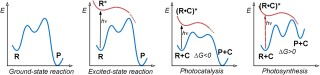
    Photocatalytic vs. photosynthetic reduction of nitrogen into ammonia: The importance of the sacrificial reducing agent

    Zidouhia Doha, Grau Etienne, Bassani Dario M.

    Journal title: Coordination Chemistry Reviews, Volume(s): 562, Part 1, Page(s): 217875 https://hal.science/hal-05601298/document 10.1016/j.ccr.2026.217875 (2026)

    More publications from this team